Check out the Rules Change Project YouTube Channel:
https://www.youtube.com/channel/UCVnm5C3Sxnj-s19wCIQc_jA/
Or look at the Video Resources tag:
ruleschange.org/tag/video/
Check out the Rules Change Project YouTube Channel:
https://www.youtube.com/channel/UCVnm5C3Sxnj-s19wCIQc_jA/
Or look at the Video Resources tag:
ruleschange.org/tag/video/
 This is where the Rules Change Project comes in. It began in 2013, in Amherst, Mass., when a small group gathered to consider how to respond to the challenge of fixing the game in an increasingly unequal and undemocratic nation. They adopted a vision statement. The Rules Change Project spotlights, amplifies and broadens support for economic and corporate rules change efforts. It is an informal, non-partisan collaboration – of individuals and independent groups – fostering a national conversation to help America to follow its democratic ideals. It illuminates how average Americans are finding answers to the tough questions, in hopes of stimulating even more Americans to follow.
If you talk to the people in Washington, D.C., who are in a position to make or change policy, they’ll tell you don’t look to them for initiative. They’ll say create public pressure on an issue and make that pressure visible.
Rules are changed by individuals who come together and refuse to accept the norm. Rules are changed through grassroots movements that grow from the ground level upwards, gaining power and influence as more and more people feel compelled to pursue change. This has been seen from the very inception of America, from the colonies that united in Revolution, to the Civil Right’s movement, to women’s suffrage, to the environmental movement.
The rules Change Project seeks to make change in cities, town states and regions more visible to Washington. One way to do that is to find examples of people and institutions sticking their necks out, above the crowd, to create change in the way we regulate, manage, or do business with corporations. So we’re looking for giraffes. Have you seen any?
In that effort, we collaborate with and link to the work of Pulitzer Prize-winning author, journalist and documentarian Hedrick Smith, and his Reclaim The American Dream initiative.
 We need to take time to examine how the rules of capitalism and free markets — formal and informal – have evolved over the last 40 years. One approach is not to end or replace the game, but to reset the rules to make them fairer to all stakeholders – employees, customers, citizens, communities, the Earth – and stockholders.
Effective change is needed in (1) government policies, (2) the way corporations govern themselves, and (3) in our communities and relationships. The Rules Change Project recognizes mainstream ideas for changes in the way large, public corporations are regulated, managed and compete in at least six key categories: influence, measurement, ownership, accountability, governance, and sustainability.
We spotlight efforts to teach corporations and managers — by example, by regulation or by consumer power — to serve society and the planet rather than focusing solely on short-term profits to shareholders. We look for examples of greater tax and wage fairness as well as equity in how the regulations are applied. We believe that natural resources should be valued because they belong to all of us, shareholders and stakeholders alike. We advocate access to information that empowers all citizens and exposes activity, behavior and incentives that are not only illegal but ethically wrong. We are watching for electoral reforms that restore faith in our democratic process.
In order to achieve these goals, the “rules change giraffes” we’re looking for will exhibit behavior framed by one or more of these issues:
Intentionally or otherwise, some actions of the people who run and invest in global corporations tend to divide and marginalizing those who challenge those actions. The Rules Change vision identifies and promotes our common ground. It seeks to expand the pool or resources and tools that support collaboration and citizen impact.
There are several best online casino games available for you to play that can enable you to reach different levels of thrill and excitement. This amazing game plays an important role in developing the thoughts of the British people regarding this version of the game. JeetWin mobile app allows the players to partake in casino games from anywhere, thus eliminating the need to have access to a computer.
If the fast paying casinos have an upload facility in their account section, do it anyway whether they ask or not. Once the live dealer casino has opened you can then choose what game you would like to play. You want to know that it is easy to deposit into your casino account and to withdraw your winnings as well.
Just anyone can start enjoying this exciting online casino game and there are no set of rules to be learnt. What’s not famous to a majority of gamers is that each one slots are programmed to mirror an exact range of winning combos and losing combos. visit site Online casino for fun slots, online casino simslots com free online slots bonus no deposit required.

(Watch Smith’s TEDx Talk at Orcas Island (posted April 1, 2015)
WILLIAMSTOWN, Mass. — Hedrick Smith’s long journalism career began covering civil rights in the American South, traversed to dissecting Kremlin policy in Moscow, to producing award-winning documentaries for the Public Broadcasting Service — along with multiple books along the way. Now the Pulitzer Prize-winning octogenerian is off to another frontier — a search for the people, ideas and institutions that might help “reclaim the American Dream.”
Smith talked about his new quest during a videoconference seminar March 3, 2015 with three Williams College seniors. They were emerging from their Winter Study research experience at a local initiative called the Rules Change Project. The effort was arranged through the campus Center for Learning in Action and Rules Change Project organizers are seeking to recruit student volunteers for additional research. Smith is author of the 2012 bestselling book, “Who Stole the American Dream.” The former Washington bureau chief for The New York Times continues to document America’s epidemic of economic inequality and consider how it might be cured.
WATCH VIDEO OF WILLIAMS DISCUSSION
“Rules Change and the American Dream: A Dialogue Across Generations,” brought together Smith with Williams seniors Mitch Prevot, Jack Atchue and Tom Cabarle. They gathered for a two-hour talk, discussion and town meeting-style dialogue with the audience. The whole event, featuring Smith “Skyping” from his Washington, D.C.-area home to a large screen in Brooks-Rogers Recital Hall — was video recorded for public use on the web and via WilliNet, Williamstown’s public-access cable service.

The Rules Change Project is at the intersection of journalism and public policy, according to longtime Williamstown resident and former jounalist and publisher Bill Densmore. “Our tag line is ‘solutions reporting about capitalism and the common good’,” says Densmore. “Our aim is to spotlight institutions and individuals who are helping to examine — and perhaps change — the relationship between corporations and government, and among corporations and key stakeholders besides stockholders — employees, customers, communities and the envirionment.”
Prevot, Atchue and Cabarle spent January reviewing hundreds of articles and resources collected by Densmore over two years and reflecting aspects of the Rules Change vision. Each then took on the task of preparing profiles of two people (a total of six among the three of them) they judged to be Rules Change “giraffes” — people and institutions sticking their necks above the crowd to foster analysis an action that will make our participatory democracy more just and open. In dialogue with Hedrick Smith, they’ll talk about their research, their designated “giraffes,” and how their January research may have affected their own thinking about reinventing the American Dream for the Millenial generation.
For two years since the publication of his book, “Who Stole the American Dream,” Smith has been crosscrossing America talking crowds large and small – in some prestigious locations – and he has gotten an earful of concern from those audiences. He’ll set the scene for the Rules Change challenge – telling us why the public feels powerless. He’ll lhave some suggestions for what to do about it, including 10 steps for reviving the American Dream. (Water Street Books will also have his book for autographed sale in the Brooks-Rogers lobby).
In his 1960s-era book, Capitalism and Freedom, and a now-famous 1970 New York Times Magazine essay, the free-market economist Milton Friedman wrote: “There is one and only one social responsibility of business–to use it resources and engage in activities designed to increase its profits so long as it stays within the rules of the game, which is to say, engages in open and free competition without deception or fraud. Fifty years later, things have changed. U.S. Sen. Elizabeth Warren often speaks about today’s economic “rules of the game” as being “rigged against the little guy.” Exactly which rules are rigged? And if so, what will it take to change them?
At the same time, legal scholars such as Lynn Stout are revisiting Friedman’s now-assumed dictum, launched by Friedman, that the only purpose of a corporation is the maximize profits. In fact, Stout writes in her book, “The Shareholder Value Myth,” there are equal values at stake – involving customers, employees, communities and the environment.
A chance to be heard – March 3
After Smith’s half-hour talk about what he’s learned from speech audiences, and the discussion with the three seniors, students and community members in the Brooks-Rogers audience will be asked to speak about their aspirations for the American Dream, about whether the “rules of the game” are rigged (for and by whom), and their ideas for involvement and change. What is the state of the American Dream? What does that mean to audience members? And how do we restore it, or reinvent it?
For more information about the evening, or about volunteering to do web-based research and writing for the Rules Change Project, email Bill Densmore at wpdensmore@gmail.com or call 617-448-6600.
ADDITIONAL LINKS:
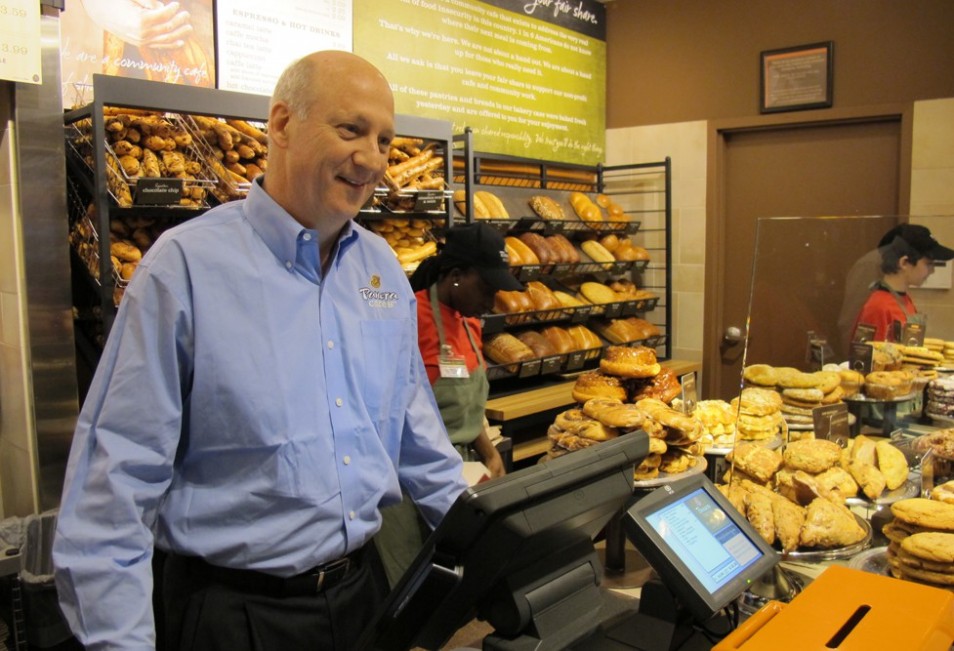
Ron Shaich built a major business — Au Bon Pain, then sold it off. While you’ve probably heard of Panera Bread, the popular national bakery/café chain — his second venture — you may not have heard of Panera Cares. The Panera Cares Cafes are only open in select locations and they do business differently. At these cafes the cash registers have been replaced by donation bins, the price list has been replaced by suggested donation amounts (equivalent to retail value at other Panera restaurants) and food is available to all regardless of ability to pay. The Panera Cares website cites that “49 million people – including 16 million children — are food insecure. That means that 1 in 7 households have difficulty providing enough food for all their members at some time during the year.” Thus Panera Cares uses a pay-what-you-can model to help those who struggle with food insecurity.


How to get the world’s corporations to broaden the idea of what is “material” to their business success and responsibility is the the subject of a new paper by Rules Change collaborator Marcy Murninghan. “Redefining Materiality II: Why it Matters, Who’s Involved and What it Means for Corporate Leaders and Boards,” was released Aug. 8 by the international non-profit, AccountAbility.
Murninghan is co-founder/editor of The Murninghan Post.
“The boundaries between corporations, the environment, and society continue to blur,” said Ted Grant, global-research head at AccountAbility. “This blurring has made identifying and focusing on what is truly important to long-term company performance, impact, and sustainability even more critical as a governance and management discipline.”
On September 5, 2013, at 11:00am EDT, AccountAbility will host a webinar with report author Murninghan, Grant, and private-sector representatives. The discussion will focus on current developments in sustainability and materiality and their implications for private-sector institutions.
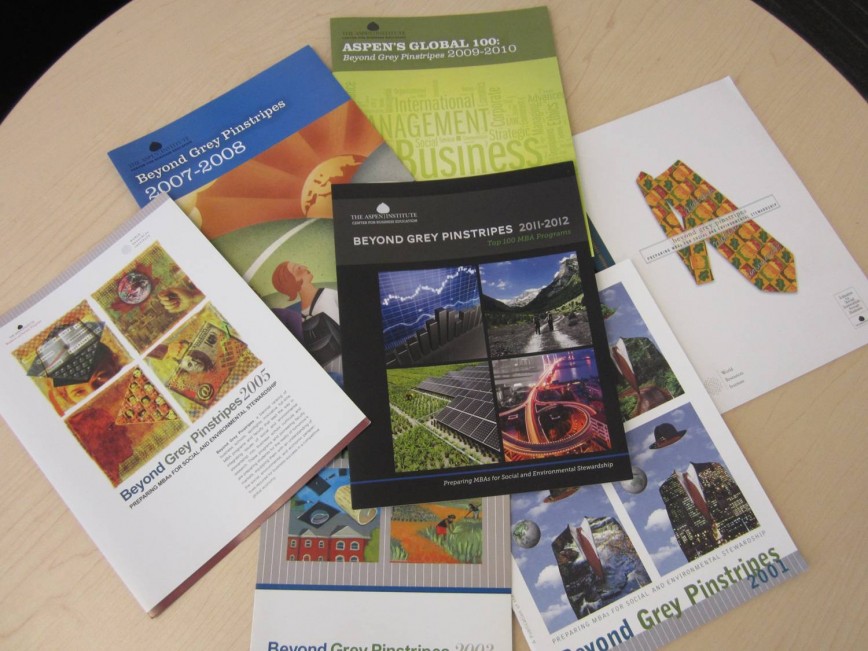

In boardrooms and think tanks, private efforts are brewing – largely behind-the-scenes at this point — to bring America’s corporate leaders to the realization that they must help reinvent American capitalism, or risk losing its star role on the world stage — if not its outright collapse.
Two of the nation’s most prestigious policy think tanks, the Aspen Institute and the Brookings Institute, are collaborating and are joined at least conceptually by the Drucker Institute, named after Peter F. Drucker, one of the world’s most revered, innovative and prolific management theorists.
“American capitalism is falling short of the aspirations of many of the system’s participants,” declared the agenda for an Aspen-Brookings gathering of 20 corporate leaders held Jan. 10 in a private, 10th-floor Madison Avenue boardroom. “Historically, the United States has responded to periods of dissatisfaction with business and capitalism with innovative vigor buttressed by sensible policy to address the deepest concerns with the system.”
For a half day, high-level executives in banking, finance, consumer products, advertising, accounting and fund management considered corporate purpose, investment advocacy and tax policies seeking an answer to this question: “Where might few find common ground in the current political environment?”
New generation employee drivers?

Brookings made public a white-paper by Steven Pearlstein, Pulitzer Prize-winning economics columnist for The Washington Post, in conjunction with the Jan. 10 gathering, entitled: “Social Capital, Corporate Purpose and the Revival of American Capitalism.” Pearlstein was among participants. A key conclusion of his 22-page paper: A new generation of younger employee-managers will push corporations away from the “straighjacket of shareholder value” because they will only stay with workplaces that offer “meaning and social value.” (DOWNLOAD PAPER)
In the end, roundtable participants adjourned having kicked around multiple concrete ideas, but without explicitly seeking consensus on the question which began their meeting: “What problems are we trying to solve in corporate governance reform?” However, organizers pledged that the meeting was the first of several planned.
“Chatham House Rule”
The basis for the roundtable discussion was the “Chatham House Rule” — No public quotation of individuals by name without their permission, a rule made in hopes of promoting uninhibited dialogue. Social-media tweeting was permitted. “How can we restore public confidence in business?” tweeted Elaine C. Kamarck, director of the Brookings Center for Effective Policy Management, a Harvard Kennedy School lecturer, and a co-convenor of the Madison Avenue gathering.
One participant wondered: Is a 50-year-trend toward a single-minded boardroom focus on increasing short-term stock price, so-called “shareholder capitalism” the reason why the public in polls has the lowest-ever respect for American corporations? Declared another participant: “If business doesn’t take the lead, this country is going to be harmed and disadvantaged.” A third asked: “How can we design policies that enhance America’s global competitiveness?”
“What policies can help reduce incentives for short-termism and corporate tax avoidance,” tweeted Judith F. Samuelson, head of Aspen’s Business & Society Program, who co-convened and lead the discussion. Asked another participant: “How do we give corporations the flexibility & incentives to do the right thing over the long-term?”
The idea of curbing management for the short term is advanced by the Drucker Institute, which held its own invitation-only gathering at Claremont Graduate Institute near Los Angeles in September, 2013. Yet: “The term ‘short-termism’ has never come up in government,” said one participant who formerly worked in the U.S. White House. “Corporate governance comes up on the periphere.”
One manifestation of “short termism” is profits generated by passing environmental or social costs on to others, said one summit participant. This undermines capitalism’s moral high ground and erodes faith in the system, the participant added.
Among ideas discussed by the Aspen-Brookings group:

Roundtable participant Stephen Davis, of the Program on Corporate Governance at Harvard Law School, cited his own 2012 Brookings paper noting there is no single federal regulator for protecting the retirement savings investments of American workers. “Who should mind the industry? Oversight of long-term savings has become a regulatory orphan,” he wrote in 2012.
A prevailing theme at the Aspen-Brookings gathering was the role and impact of activist investors on turning the attention of corporate CEOs to inflating stock prices rather than managing for the long term.
“Companies should say how they are run and for what purposes they are run and should be held accountable for it,” said one participant. Companies who do so forthrightly aren’t as likely to be takeover targets, the participant added. “Nobody messes with people like Warren Buffett or Steve Jobs.”
On taxes, one tax-policy expert declared: “We heed more tax revenues – we have a revenue problem not a spending problem.” Much discussion centered on the impact of raising the U.S. tax on capital gains, extending the holding period to three years or more for capital-gains treatment, or eliminating completely the distinction between capital-gains and ordinary income or retained earnings. There was no obvious consensus, however.
RELATED LINKS