Author: wpdensmore

  • BOOKS: Robert Monk’s “Citizens Dis-United” — an articulate argument for change from a one-time Wall Street insider

    From his perch on the coast of Maine, an octogenerian steeped in the ways of Wall Street investing and governance is fighting a battle for change.  In his book, Citizens DisUnited: Passive Investors, Drone CEOs and the Corporate Capture of the American Dream, Robert A.G. Monks offers a “call to arms” to American citizens to defend our capitalist democracy.

     More about Citizens DisUnited

    By documenting corporate capture and describing the prevalence of managerial opportunism, Monks delivers a striking critique to the modern corporations and their shareholders. Monks, who is a co-founder of the corporate governance proxy firm Institutional Shareholder Services and an alumnus of Harvard, also carefully documents the ways in which boards of directors and CEOs retain absolute control over the companies they run.

    With help from Delaware court interpretations, which Monks believes are tainted by an interest in retaining board-insulating statutes, CEOs have defended their power over the corporate ballot in the face of repeated advances by activist shareholders. After all, why would CEOs grant shareholders a channel through which their own pay and job security could be disrupted? Consequently, and perhaps predictably, CEOs grant lavish pay not only to themselves but also t0 their board of directors.

    As the owners of corporations, shareholders lack sufficiently strong tools with which to discourage or reverse managerial misconduct or address concerns associated with flawed corporate governance structures. However, the power of owners to exert control over corporations is strengthening in some ways, as Monks describes.

    For example, Monks notes the prevalence of staggered boards in public American corporations. Staggered board provisions allow only some portion of the board—usually one-third—to be up for election each year.In practice, for shareholders, staggered boards limit potential changes in board representation. For example, a dissident shareholder could not replace the entire board of directors if the company’s board was staggered. The restrictive effects of staggered boards on shareholder influence are intensified by the tendency of board nominees to come from the choosing of management rather than from shareholders.

    In this sense, CEOs are able to systematically re-populate the board of directors with people who will serve the interests of the CEO—further undermining the influence and interests of shareholders. However, staggered boards have been on the decline especially in large American corporations.

    Perhaps stirred by corporate scandals at Enron, WorldCom, and others, shareholders, policymakers, and the U.S. Securities and Exchange Commission have been active in strengthening the ability of shareholders to influence corporate decision-making. In addition, and more recently, academics such as Harvard Law School’s Lucian Bebchuk  (See: “The Long-Term Effcts of Hedge Fund Activism”) have advocated for the right of shareholders to modify the corporate governance arrangements of corporations. Shareholders have also taken aim at the structure of the corporate ballot, the makeup of the board, and the ability of shareholders to amend corporate bylaw in order to help shareholders exert control over the companies they ostensibly own.

    Monks work is captivating, comprehensive, and indispensable to the current “shareholder democracy” movement. His books is available here.

    RELATED LINKS:

  • In Oregon, did “first lady” Cylvia Hayes stick her neck out too far on poverty, health and genuine progress — or consulting?

    At the heart of the 2015 gubernatorial political upheaval in Oregon is an underlying question:  When a close friend of a public official is being paid by third parties to advocate particular policies, what is the responsibility of the public official to put distance between their public role and that friendship? And what if the close friend is a fiancee? Can she pursue her advocacy in government buildings?  In Oregon, did Hayes and Kitzhaber cross some ethical line?
    Is Cylvia Hayes a Rules Change giraffe, or something else?
     
    An effort by the state of Oregon to measure progress by new methods besides gross domestic product  moved in February, 2015 near the center of a political controversy which drove the state’s three-term governor, John Kitzhaber, to announce his resignation.  Kitzhaber and his fiancee, Cylvia Hayes, support adoption of a “Genuine Progress Indicator” standard for measuring Oregon’s happiness and well being beyond traditional economic indicators.  Hayes spoke about the GPI idea, and the challenges of health and poverty at the CommonBound conference in Boston in June, 2014.
    RESOURCES: 
    Cylvia Hayes
    Cylvia Hayes
     
    Now a federal prosecutor and state ethics officials may be pondering that question.  In the meantime, what happens to the issues Hayes and Kitzhaber have advocated?
     
    Stories about the impending resignation of Kitzhaber mentioned the consulting work of Hayes.  Hayes was not employed by the state, but described herself as “Oregon’s First Lady,” as a result of her long-term relationship with Kitzhaber. News accounts describe her as working on her consulting  business from government offices.   “”She’s an independent woman,” Kitzhaber said during  a January news conference. “She doesn’t work for the state of Oregon . . . . ”  The governor said Hayes is traveling to Berlin to participate in a conference on the Gross National Happiness index, part of a series of meetings that included Kitzhaber and Hayes’ controversial trip to Bhutan in 2013.
    DocumentThe Oregon GPI Proposal   . . . “an alternative measure for the state’s economy that takes into account not just goods produced but citizens’ well-being.”
    The nub of the story seemed to be this, as one Washington Post account put it: 
     
    “Cylvia Hayes was guiding state employees on the implementation of a new policy [the Genuine Progress Indicator] even as she was doing private consulting work for a group pushing the same policy. “
    The Portland Oregonian, the state’s dominant paper, has been covering the issue for months:  EXAMPLE No. 1 and EXAMPLE No. 2.
    “The mounting scandal over those contracts, which paid Hayes at least $213,000 since 2011, prompted Kitzhaber to resign Friday,” The Oregonian reported. “The subpoena seeks information concerning Hayes’ clients and partners including Demos, Resource Media, Energy Foundation, [Eugene-based] Rural Development Initiatives, [Washington, D.C.-based] Clean Economy Development Center, Waste to Energy and the Oregon Business Council.” State officials are ordered to turn over to the grand jury records that are a catalog of Kitzhaber’s climate and economy-related initiatives:Genuine Progress Indicator, Pacific Coast Collaborative, Oregon Prosperity Initiative, low carbon fuel standards and sustainable economic development . . . The state is ordered to turn over emails, correspondence, memos and other state records about Hayes’ clients, including Demos, Resource Media, Energy Foundation, Rural Development Initiatives, Clean Economy Development Center, Waste to Energy.
     
    A more details summary of the alleged conflict appeared in an earlier, FEb. 9 Washington Post account, excerpted below. 
    From a Portland Oregonian/Oregon live report, quoting a legal response from Hayes and Kitzhaber in a state ethics-commission inquiry: 
     
    “The title ‘First Lady’ does not refer to an official office within Oregon state government or an officer of Oregon state government,” they wrote. “Ms. Hayes is not a public official.”  The Oregonian account continues: “Hayes incorporated the title of first lady into her state role as well as her private consulting work. She sought state reimbursement for more than $3,600 she spent on travel and meals while conducting first lady business.She once used a desk in the governor’s office suite, and had a state-paid assistant. As for whether she was a public official, she subbed in for the governor at public events. She orchestrated meetings with senior state officials. She served as the governor’s unpaid adviser on energy and economic policies – by the governor’s reckoning, contributing thousands of hours. She also signed disclosure forms labeled “Guidelines for Outside Employment of Public Officials.” In 2011, she registered as a lobbyist for the governor’s office . . . The governor’s office acknowledged both roles in a letter last Oct. 13 to the Ethics Commission, saying the office “has treated Cylvia Hayes in her First Lady role as a “public official” in order to ensure compliance with state ethics statutes.” (See: DocumentHayes’ conflict of interest forms)
    In a wrap-up story published in the Washington Post on Feb. 9, the paper’s reporter said “Kitzhaber has struggled to describe Hayes’s dual role as both one of his top public advisers and a private consultant with business before the state.”  The Post account continued: “Last week, The Oregonian, the state’s largest newspaper, called on Kitzhaber to resign.”
    THE POST CONTINUED:

    The latest cache of e-mails, released Friday to The Oregonian and obtained by The Washington Post, show Hayes was involved in the development of an alternative economic measure, the Genuine Progress Indicator, at the same time she was being paid by Demos, the group that advocates for adoption of the indicator. Those e-mails show Hayes scheduled a meeting with top officials in the governor’s administration and the Department of Administrative Services to discuss the Genuine Progress Indicator at Mahonia Hall, Oregon’s governor’s mansion, just three days after she sent her first invoice to Demos. Many of the e-mails from Hayes include her signature, which identifies her as Oregon’s first lady. The e-mails also include correspondence from Kitzhaber himself, through a Gmail account, strategizing ways to develop a GPI  Web site and suggesting that the state hire a policy expert who helped implement the metric in Maryland. Another e-mail from Hayes to Department of Administrative Services chief operating officer Michael Jordan lays out a description of duties for which that employee would have been responsible, and additional tasks Hayes said she would provide herself. Kitzhaber’s office did not immediately answer a request for comment  . . . Kitzhaber said last month that Hayes would no longer serve in a policy role in the final three years of his term. The Oregon Government Ethics Commission is still looking into Kitzhaber’s administration’s efforts to maintain an ethical line between Hayes’s public and private roles.

    ADDITIONAL REPORTING:
    Portland’s twice weekly paper, the Portland Tribune, shares with the Bend Bulletin (part of EO Media Group) a reporter covering the state house who did some of the  first tallying of Hayes’ consulting.  The reporter,  Hillary Borrud has a degree from the Columbia University Graduate School of Journalism:

    One of Borrud’s stories in January sought out political ethicists to consider whether Hayes relationship with state government through her relationship with Kitzhaber was problematic.  Here is an excerpt of what Borrud wrote:

    Experts on government ethics and the intersection of politics and nonprofits said Hayes’ job in particular raises questions, such as whether her compensation was reasonable given the amount of work she did and whether Hayes’ employer sought to use the connection to influence state policy . . .  Kent Redfield, a political science professor at the University of Illinois Springfield, said tangible evidence of Hayes’ work for the Clean Economy Development Center is important, because there are examples across the United States in which entities sought to influence public officials by offering no-show jobs to the officials or their family members  “If there’s no work product and you’ve got a situation where you’re hiring the governor’s spouse or someone with a close personal relationship with the governor, then you can certainly have fraud,” Redfield said.
  • BOOKS: Jennifer Silva proves academic expertise on income inequality with “Coming Up Short”

    Coming up short cover

    While earning her Ph.D. in sociology at the University of Virginia, Harvard University postdoctoral fellow Jennifer Silver began studying the impact of economic inequality on young adults.

    In her 2013 book Coming Up Short: Working Class Adulthood in an Age of Uncertainty,  Silva  describes the barriers to reaching the hallmarks of American adulthood in the neoliberal era. With tuition prices rising and unemployment high, socioeconomic self-advancement through education does not come as easily as the American dream once provided.

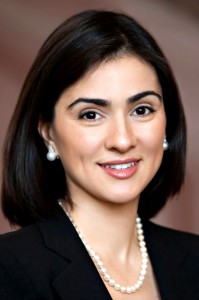
    Jennifer Silva (photo: Harvard University)

    Silva examines how the economic consequences of neoliberalism create uneven burdens. Silva points out that more than one third of low-income families were paying interest payments equivalent to 40 percent of their income in 2007 versus highest-income families who paid only 3.8 percent of their income in interest payments. Student and car loans also add to this state of financial instability faced by millions of young Americans, she writes.

    Silva brings the story to life through a number of informants who share first hand observations on the psychological, social, and economic effects of neoliberalism. The book is well written, highly accessible, and targets many of the salient political issues of our time.

    “Jen is currently working with the Saguaro Seminar on a team led by Harvard Professor Robert Putnam that is exploring the impact of economic insecurity on social connectedness and civic engagement. As a qualitative researcher on the project, Jen interviewed young adults and their parents from diverse backgrounds across the US about the challenges of growing up today.”  (excerpt from her Harvard “bio” site)

    Coming Up Short is available here.  Read an additional review.

    RELATED LINKS:

    •  Book review in the Times Higher Education supplement
    • Boston Globe: Losing hope of the American dream, a generation aims for inner strength instead
    • Video clip from Oxford University Press.
  • Millionaire entrepreneur Nick Hanauer’s message to plutocrats: “The pitchforks are coming”

    With inequality soaring to unprecedented levels, groups like Occupy Wall Street have made it clear that the 99% want change. There are those among the 1%, however, that assert a need for change as well. Nick Hanauer is a Seattle-based entreprenuer involved with many businesses as a founder or investor over his career. In a June, 2014, piece for Politico Magazine, Hanauer directed a ‘memo’ at his ‘fellow zillionaires’ warning of a pending revolution.

    Hanauer cites that, at no point in history, has this level of inequality been sustained without suffering a revolution or becoming a police state, warning, “Unless our policies change dramatically, the middle class will disappear, and we will be back to late 18th-century France. Before the revolution.” Hanauer depicts his fellow-zillionaires as being dismissive of these concerns. He chides them for citing seeing a poor kid with an iphone as evidence that inequality is overblown.

    Hanauer may serve as a credible forward thinker as his foresight is largely what made him his fortune. In his words,

    “But let’s speak frankly to each other. I’m not the smartest guy you’ve ever met, or the hardest-working. I was a mediocre student. I’m not technical at all—I can’t write a word of code. What sets me apart, I think, is a tolerance for risk and an intuition about what will happen in the future. Seeing where things are headed is the essence of entrepreneurship. And what do I see in our future now?  I see pitchforks.”

    It is definitely worth giving the full memo a read as it is a fresh take from a .01 percenter. That said, Hanauer certainly doesn’t want his wealth redistributed, he concludes his memo with the assertion that changing the rules to the game could benefit the rich as well as the poor:

    The most ironic thing about rising inequality is how completely unnecessary and self-defeating it is. If we do something about it, if we adjust our policies in the way that, say, Franklin D. Roosevelt did during the Great Depression—so that we help the 99 percent and preempt the revolutionaries and crazies, the ones with the pitchforks—that will be the best thing possible for us rich folks, too. It’s not just that we’ll escape with our lives; it’s that we’ll most certainly get even richer.

  • Yvon Chouinard leads by example as Patagonia joins B-corp movement

    Outdoor apparel maker Patagonia is cited as a poster child for the new wave of “B-Corporations” that elevates “sustainable” business practices as of equal importance with profits.  Does such a strategy, paradoxically, lead to better earnings?

    Patagonia founder Yvon Chouinard never set out to start a big company and certainly never wanted to be a businessman. As someone who drives a beat up Subaru and doesn’t own a cellphone or computer, Chouinard never set out to get rich and is genuine in his desire to influence better corporate behavior.

    fortune-yvon-chouinard

    He was an avid mountain climber by the time he reached high school. Dissatisfied with his climbing tools he taught himself to blacksmith and began making his own equipment. Soon this evolved into a business and he began selling apparel to his fellow climbers. Today Patagonia nears half a billion in sales every year. However, as Chouinard doesn’t see himself as a businessman he does things quite differently.

    Despite their steady growth in sales, a couple of years ago Patagonia actually launched a campaign to discourage consumers from buying their products. With Black Friday looming, Patagonia bought a full page ad in The New York Times with bold print stating: “Don’t Buy This Jacket,” with an image of a Patagonia fleece and information about the importance of sustainability. Patagonia did this because to Chouinard, his businesses impact on the community, it’s employees and the environment are far more important than how much profit is brought in.

    Patagonia helps it’s employees by providing subsidized daycare and offering flex hours that allow workers to leave the office whenever they want for any reason — especially surfing (hence the title of his autobiography Let My People Go Surfing.) Patagonia also has various initiatives to help the environment such as 1% For The Planet through which Patagonia and other likeminded businesses donate 1% of annual revenues to grassroots environmental organizations. They also consult other much larger businesses on ways to be more green such as Walmart. Chouinard is able to do things so differently because there are no shareholders to be beholden to and he is adamant about keeping it that way.

    In 2012 Patagonia became the first company to register as a benefit corporation in California. A benefit corporation or ‘B-corp’ is a corporation that uses the power of business to solve social and environmental problems. These corporations are committed to meet comprehensive and transparent social and environmental performance standards, meet higher legal accountability standards and to build business constituency for policies that support sustainable business.

    OBSERVATION: Patagonia remains a great example of the positive power of corporations to do good when business leaders consider values like environmentalism along with profits.

  • BOOK/VIDEO: Zeynep Ton’s “good jobs” strategy attracts mainstream attention to four key aspects of operational excellence

    VIDEO: Zeynep Ton TEDx talk at Cambridge, 2013

    Ton, Zeynep. The Good Jobs Strategy: How the Smartest Companies Invest in Employees to Lower Costs and Boost Profits. N.p.: Amazon, n.d. Print.

    In her book The Good Jobs Strategy, MIT Sloan Professor Zeynep Ton seeks to put a dagger in the shareholder value maximization ideology prevailing at companies today. She suggests that switching to a stakeholder, employee-centered model is not only better for inclusive prosperity,zeynep-ton-mit-06-29-11-HEADbut also better for shareholders and long-term profits as well.

    Her argument is attracting mainstream attention, including a complimentary Joe Nocera column in The New York Times.

    Ton explains that treating employees well leads to what she calls the virtuous cycle of retail. A high budget for labor leads to good quantity and quality of labor. This in turn allows for good execution of operations, which she defines as the process of getting products from the factory to the where customers can buy them. Good operations lead to higher profits, which in turn allow for a greater budget for labor, and so on.

    Ton identifies four main companies to analyze that have entered into this virtuous cycle: Trader Joe’s, Quiktrip, Costco and UPS. This is a small but diverse sampling of companies, and accordingly they all implement the virtuous cycle in different ways. However, Ton identifies four ways in which their strategies overlap, and she calls this the “Good Jobs Strategy.”

    These companies maximize operational excellence by doing four main things: offering less, standardizing operations and empowering employees, cross-training employees, and erring on the side of overstaffing, not understaffing.

    By offering less, companies are able to lower costs and increase efficiency. Having fewer choices also allows employees to better know the company’s products. Standardizing also increases efficiency, but it is most effective when paired with empowering employees. Empowered employees can use their judgment in certain scenarios and contribute to improvement of operations through innovative ideas. Cross-training employees to perform different tasks allows for the tasks that are being performed, not the employees’ schedules, to be the thing that changes depending on labor demand. In this way, employees’ working hours can remain stable, leading to happier employees that better contribute to the virtuous cycle.   Lastly, companies engaged in the good jobs strategy know that it is better to lose costs in overstaffing than in understaffing. This is because overstaffing costs are easily calculated and short-term, whereas the cost of understaffing may not felt at first but can dangerously build up over time.  Poor customer service and operational weakness can lead to long-term customer loss.

    Ton’s good job strategy companies are extremely profitable and successful. They stand as powerful evidence for Ton’s radical idea that shareholder value maximization isn’t the actually the best way to get the most value for shareholders. Instead, there is a way not only increases profits for shareholders, but for all stakeholders – “the Good Jobs Strategy.”

     RELATED RESOURCES:
  • BOOKS/VIDEO: “How on Earth?” Post Growth Institute co-founder Donnie Maclurcan believes we can flourish by 2050 in a nonprofit world measured by new forms of growth

    Watch a short VIDEO of Donnie Maclurcan, or a longer (52-minute)  version of his arguments: “What If? Thriving Beyond Economic Growth.” 

    Will not-for-profit organizations be the heart of the global economic by 2050? Is it possible to innovate and advance, without economic growth? Donnie Maclurcan thinks so. And he’s written a book about it with a group of collaborators.

    HowOnEarth_FinalCover_Render-croppedThe Post Growth Institute was to release in June 2015 the book: How on Earth? Flourishing in a Not-For-Profit World by

    2050, by Donnie Maclurcan and Jen HintonThe book is concerned with not-for-profit enterprises that are said to be the future of business from a grassroots to international level. The Post Growth Institute outlined its aspirations regarding this book here.  (REVIEW) / You can pre-order the book  from Chelsea Green Press.

    Donnie Maclurcan is Co-Founder of thePost Growth Institute and Ideas Guy at Project Australia – a community organisation helping people launch not-for-profit initiatives. His career has included working as an exercise physiologist and telephone counselor, coordinator of a lobby group for Aboriginal justice and a team assisting Sydney’s homeless, a journalist at the World Social Forum in Kenya, coach of the Fijian sailing team, an English and mathematics teacher in South Korea, event manager for The Great Australian Bike Ride, nanny and wedding singer.

    He ran Project Australia – an organization that helps people start not-for-profit projects, whilst writing books about nanotechnology and global equity/sustainability (the area of his PhD). He enjoys asking big questions, and is passionate about appropriate technology, inner creativity, radical thinking and asset-based community development. After reading E.F. Schumacher’s Small is Beautiful in 2003, he developed a strong interest in post-growth futures that, ironically, has been growing ever since.

    Donnie Maclurcan now lives in Ashland, Oregon, and is a distinguished fellow with the Schumacher Institute for Sustainable Systems. He is the author of  Nanotechnology and Global Equality.

    jenniferhintonMA@gmail.com or call 720-438-8901

    Donnie Maclurcan / Twitter: @donmacca
    Co-founder: ,. Passionate about not-for-profit enterprise & truly sustainable futures

    RELATED LINKS:

  • UFW takes on payday loan business in 2015 ‘State of the Dream’ report; says costs $3K per family per year

    [Payday loan businesses] are literally taking money from people that cannot afford to pay it. That is more money than the U.S. government spends on all food-based assistance programs annually.”

    Over 93 million people are doing most or all of their banking through predatory fringe lenders and they are paying an average of $103 billion per year in fees and interest, the Boston-based non-profit United for a Fair Economy says in its annual report made public Jan. 14. “This is more money lost in poor communities than the United States spends on domestic food aid annually,” says the report, adding: ” We as a society end up subsidizing that lost income (an average of $3,029 per affected household) through a social
    safety net that is already underfunded and overcapacity.”

    UFW is an organization focused on challenging “the concentration of wealth and power that corrupts democracy, deepens the racial divide and tears communities.”  The organization’s annual report catalogs the various forces that together reinforce economic inequality along the lines of race.

    The report, with a forward written by Van Jones, recommends:

    • Expanding the payment and banking services offered at 31,000 branches of the U.S. Postal Service, as is common in other countries.
    • Building on effective Bank On and Lending Circle programs.
    • Capping interest rates and limiting the amount and length of payday loans, fees and interest, and increase regulation of non-bank lending services by the federal Consumer Financial Protection Bureau.
    • Modernizing the Community Reinvestment Act.

    “Payday lenders are perhaps the most menacing of alternative financial service,” says the report. “Lenders tend to be largely concentrated within poorer communities of color.”  The report also notes “there are more payday lenders than McDonalds or Starbucks locations in the United States.” Problematically, the payday loan business thrives on repeat borrowers rather than one-time borrowers. This situation is harmful because repeat lenders often build an outstanding balance and incur high interest expenses and other fees. Importantly, payday loan borrowers are often left with a lack of alternatives if faced with an unforeseen expense. Thus, they are left to rely on the lightly regulated payday loan industry, which deliberately sets up branches in poor minority regions.

    According to the report, “they [payday loan businesses] are literally taking money from people that cannot afford to pay it. That is more money than the U.S. government spends on all food-based assistance programs annually.” From this perspective, analyzing and considering the negative effects of payday loans might better serve the public interest. Especially to the extent that payday loans complicate and compromise other government efforts intended to alleviate economic distress among poor Americans, reforming alternative financing options should be a national priority.

    The full “State of the Dream” report is available here